About
Workshop Overview
The 2nd International Workshop on Space Geotechnics, Regolith, and Granular Materials (IWSGRGM 2027) will bring together an international community of researchers, engineers, space-agency representatives, industry professionals, educators, and students working to advance the exploration and development of the Moon and other planetary bodies.
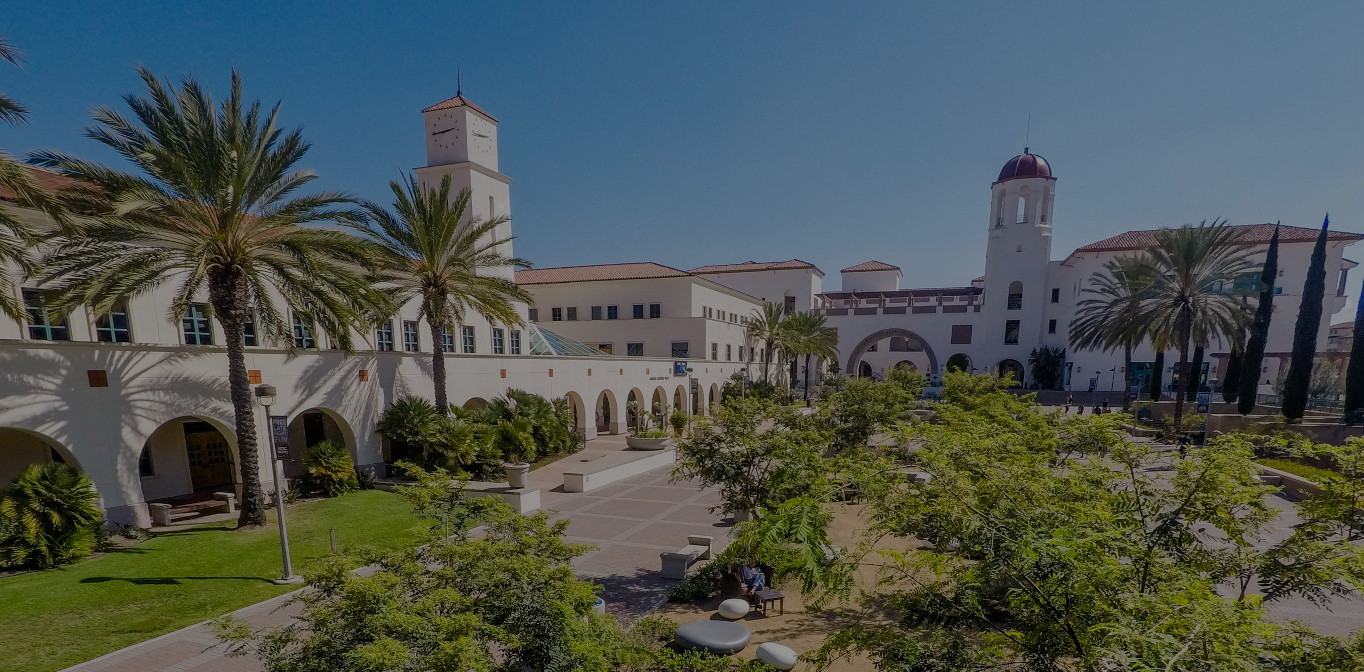
Held at San Diego State University on April 19–23, 2027, the workshop will provide a focused forum for exchanging scientific discoveries, engineering solutions, operational experience, and emerging technologies related to regolith, and granular materials. The program will include keynote and invited presentations, technical sessions, panel discussions, poster presentations, networking opportunities, and a planned technical visit.
The workshop seeks to connect fundamental research with practical engineering needs and to strengthen collaboration among universities, government agencies, research institutions, and industry. Particular emphasis will be placed on technologies and knowledge needed to support safe, resilient, and sustainable lunar surface operations.
Conference Theme
Building the Moon: Geotechnical Investigation, Design, Construction, and Resource Utilization
The theme “Building the Moon” reflects the growing need to move from short-duration lunar missions toward sustained exploration and long-term surface operations. Achieving this goal will require a detailed understanding of lunar regolith and the development of reliable methods for investigating, designing, constructing, monitoring, and maintaining lunar infrastructure.
The workshop will address the complete development pathway—from site characterization and subsurface investigation to excavation, mobility, foundation design, construction, infrastructure operations, and in-situ resource utilization. It will also explore how lunar regolith can be characterized, handled, processed, and used as a local resource for construction, protection, manufacturing, and other mission needs.
By connecting geotechnical engineering, granular mechanics, planetary science, robotics, sensing, construction technology, and resource utilization, IWSGRGM 2027 will help translate scientific knowledge into practical solutions for future lunar missions.
Who Should Attend
IWSGRGM 2027 welcomes participants from across the international space, research, engineering, and education communities, including:
- Researchers in geotechnical engineering, granular mechanics, planetary science, and related disciplines
- Engineers and scientists from NASA and other national and international space agencies
- Professionals from the aerospace, robotics, construction, mining, instrumentation, and space-resources industries
- Researchers from universities, government laboratories, and research institutions
- Mission planners, technology developers, and systems engineers
- Standards-development professionals and policymakers
- Faculty members, educators, and workforce-development leaders
- Graduate and undergraduate students
- Early-career researchers and professionals entering the field of space geotechnics
The workshop is intended for both established experts and participants interested in applying terrestrial engineering knowledge to the challenges of lunar and planetary exploration.
Workshop History
The inaugural International Workshop on Granular Materials and Regolith (2025) established a dedicated forum for researchers and practitioners to exchange knowledge at the intersection of geotechnical engineering, granular materials, planetary science, and space exploration.
IWSGRGM 2027 builds upon the technical discussions, research connections, and shared priorities established during the first workshop. The second workshop expands the conversation from fundamental regolith behavior and characterization toward the investigation, design, construction, resource utilization, monitoring, and long-term operation of lunar infrastructure.
Through a broader international program and increased participation from space agencies and industry, IWSGRGM 2027 aims to strengthen the growing space-geotechnics community and accelerate the transition from research concepts to mission-relevant technologies and engineering practices.
Host and Organizing Organizations
IWSGRGM 2027 is hosted by San Diego State University in San Diego, California.
The workshop is organized in collaboration with participating technical committees and international research networks associated with:
- American Society of Civil Engineers Aerospace Division – Space Engineering and Construction Technical Committee
- American Society of Civil Engineers Engineering Mechanics Institute – Granular Materials Technical Committee
- American Society of Civil Engineers Geo-Institute – Sustainability in Geotechnical Engineering Technical Committee
- International Society for Soil Mechanics and Geotechnical Engineering – Technical Committee 310
- French National Centre for Scientific Research – International Research Network GeoMech
These organizations bring together complementary expertise in geotechnical engineering, granular mechanics, sustainable infrastructure, planetary construction, and space exploration.
Expected Outcomes
IWSGRGM 2027 is designed to generate lasting scientific, technical, educational, and professional benefits. Expected outcomes include:
- New international and interdisciplinary research collaborations
- Improved coordination among universities, government agencies, research centers, and industry
- Identification of shared scientific questions, technology gaps, and technical priorities
- Exchange of experimental methods, modeling approaches, datasets, and lessons learned
- Advancement of technologies for lunar site investigation, excavation, mobility, construction, monitoring, and resource utilization
- Discussion of terminology, testing methods, engineering guidance, and future standards for space geotechnics
- Stronger pathways for students and early-career professionals to enter the space workforce
- New university–government–industry partnerships supporting future research and technology development
- Development of a more connected international community focused on the responsible and sustainable development of lunar infrastructure
Ultimately, the workshop seeks to help establish the technical knowledge, collaborative networks, and workforce needed to support humanity’s sustained presence on the Moon.